The broadcasts of the presidential debates this year will reach 60 million or more Americans. The array of candidates running includes two former members of Congress--Libertarian Bob Barr and Green Cynthia McKinney--as well as me, but viewers will see only two choices: a Democrat and a Republican. The rest of us are not invited.
Few voters likely know that the debate sponsor, the Commission on Presidential Debates, was created in 1987 by the two parties. Don't be fooled by its claim that its goal is to provide "the best possible information to viewers and listeners." Its purpose is to give the parties cover when they bar other legitimate candidates from debating.
Ross Perot got in the debates in 1992 even though he was polling below 10 percent. Afterwards, the two parties retaliated, hiking up the threshold for entry to 15 percent, a Catch-22 level of support that is almost impossible for any third-party candidate to reach without first getting in the debates.
Walter Cronkite called the commission's debates an "unconscionable fraud." New York Mayor Michael Bloomberg calls them a "mockery." The League of Women Voters called them "campaign-trail charades devoid of substance, spontaneity, and honest answers to tough questions." A genuinely nonpartisan, civic organization, the league used to sponsor the debates but quit in disgust in 1988, saying: "The league has no intention of becoming an accessory to the hoodwinking of the American public."
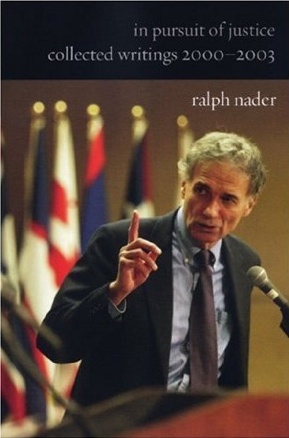
above is ralph nader writing in 'Nader: Open the Debates for Third Party Candidates Like Bob Barr, Cynthia McKinney and Me' (u.s. news & world reports).
so on nbc tonight, heroes started its third season. i hadn't watched the show. no offense. i'm just not big on t.v. but 1 of my readers (gerald) has been writing over the summer to get me to check it out and i promised i would watch the season debut. (as did flyboy who reads more of the e-mails that come in then i do.) so we got the baby down during the 1st hour (which was some sort of meet the cast or making of kind of thing, i didn't see it). then we watched the show. and when it went off, i was thinking, 'well i actually would watch the next 1 and what's going to happen to clair?' i didn't have to wait long because the next episode was on right after. it was 2 new episodes tonight which i guess i didn't understand and good for that because if i had thought i would have to watch 2 hours, i would have said no. just the thought of 2 hours of t.v. is a bit much for me if i have to watch.
i have no problem having the t.v. on and doing something else. i do that with the news all the time and will leave it on cnn for hours. if something catches my attention, i'll watch that. but mainly it's just background noise. to actively watch for 2 hours would have seemed too much; however, it was 2 very strong episode sthat i really got caught up in (so did flyboy). i knew ava and c.i. had reviewed it and picked it as 1 of the best when it came on. (actually, bit of trivia, they broke 'street date'. they don't watch most of the programs when they air. they get dvds from friends and scripts as well. either with the network or with the show. their heroes review was the only review so far that they reviewed before it aired. they had written the debut down wrong in their notes and they thought they were reviewing it the sunday after it aired. instead they were reviewing it before it aired. they wouldn't have put it off if they'd known that. not for long because they wanted to steer people to the show.)
it's gerald's favorite show and i can see why.
there are a lot of characters which keeps it moving. but it also makes you wish that there was more time. if we watch next monday, my biggest complaint will probably be that it's only 1 hour.
gerald thought clair, nathan and nikki would be my favorite characters. nikki wasn't on. the same actress is apparently playing a different character. (or maybe i misunderstood.) but i did enjoy clair and nathan.
medium is a show i will be watching when it comes back on. but i'm not a big t.v. watcher (again, in terms of sitting down and being bound to the t.v. for the duration of a program. i do like the new adventures of old christine and will be watching it wednesday for its season debut.
and that's going to be it for me tonight. i don't have the time to watch 2 hours of t.v. and do a lengthy post. but i will say thank you to gerald and that he was right, heroes is a very good show.
let's close with c.i.'s 'Iraq snapshot:'
Monday, September 22, 2008. Chaos and violence continue, the US military announces another death, Shell returns to Iraq, evaluating the 'surge' and more.
NPR's Lourdes Garcia-Navarro (Morning Edition) reports on the growing tensions in Khanaqin, a city in Diyala Province (and, not noted by NPR, an oil rich area containing the Naft Khana oil field). Garcia-Navarro notes that "Khanaqin is a disputed city that lies about 15 miles outside of the Kurdish provincial borders. As far as the Iraqi government is concerned, it falls under the province of Diyala's control. Last month the Iraqi government sent the Iraqi army into Diyala Province one of the most restive in the country to flush out al Qaeda in Iraq as part of that operation the Iraqi national security forces tried to move into Khanaqin but they were stopped by the Kurdish troops." "Last month" is actually July 29th. During Saddam's rule, Kurds were expelled from Khanaqin and Arabs were brought in. The illegal war changed that and now Arabs are expelled. Garcia-Navarrot notes that "these days it's the Kurdish leadership that's been expanding its control since the US-led invasion in towns and cities outside of Kurdistan. It's been deploying Kurdish forces and bankrolling local governments. Many Arab-Iraqis suspect that Kurds are trying to get control over an ever-widening swatch of land as a precursor to an eventual bid for independence. The Kurds deny it." The report notes that the Iraqi military has been refused entry Khanaqin and that last week Abd al-Qadir al-Mufriji, Iraq's Defense Minister, and the US military's 2nd command in Iraq visited the region in an attempt to work out some understanding but none was reached and the Iraqi military is still refused entry and the Kurdish pesh merga patrol the city.
Khanaqin has been in the news before this month. From the September 15th snapshot:
Saturday BBC reported, "A roadside bomb killed six Kurdish peshmerga fighters in Khanaqin town in Diyala province, north-east of Baghdad." Sam Dagher (New York Times) observed that the Saturday bombing increased "tensions with the Iraqi government and local Arabs over the Kurds' presence in the area. The Kurdish presence in Khanaquin, and in other nearby areas, has been a growing source of tension. Kurdish forces have been moving the borders of their semiautonomous region in northern Iraq, in what they say is an effort to improve security. But the move has been viewed by many Iraqi and American officials as a threat to stability in areas that are already prone to violence." Amit R. Paley (Washington Post) reported before the bombing, "Kurdish leaders have expanded their authority over a roughly 300-mile-long swath of territory beyond the borders of their autonomous region in northern Iraq, stationing thousands of soldiers in ethnically mixed areas in what Iraqi Arabs see as an encroachment on their homelands. The assertion of greater Kurdish control, which has taken hold gradually since the war began and caused tens of thousands of Arabs to flee their homes, is viewed by Iraqi Arab and U.S. officials as a provocative and potentially destabilizing action." An Iraqi correspondent for McClatchy (at Inside Iraq) reviews the benefits for the Kurds and wonders if "is it right to cause a state to collapse into entities to realize your dream?" The correspondent notes how the Peshmerga appears to decide what they will do and which areas (Kurdish or non-Kurdish) they will 'patrol.' Of oil-rich Kirkuk, the correspondent notes that Kurds compose only an estimated 40% of the city's population but have "taken control of it and the Pershmerga handle the security there". Of the Iraqi Constitution, the correspondents notes that "the Kurds objected to the statement that read 'Iraq is an Arab state and part of the Arab nation' pointing out that there are other ethnic groups that would be offended. So the statement was struck out -- as if by a magic wand disregarding the other constituents of the Iraqi population. Arabs constitute 84% of the population."
The Washington Post's Amit R. Paley noted then (September 12th), "The face-off between the Iraqi army and pesh merga has stoked fears of Arab-Kurdish strife just as Iraqis begin to recover from years of sectarian violence between Shiites and Sunnis." The Foreign Relations Minister of the KRG (Kurdistan Regional Government), Falah Mustafa Bakir, disputed that in a letter to the Post published Sept. 18th where he maintained that "the city was peaceful until Iraqi Prime Minister Nouri al-Maliki sent Iraqi military forces there last month in an unwelcome and unnecessary provocation that sparked demonstrations by tens of thousands of residents. This aggressive act caught the Kurdistan regional leadership by surprise, given that it occurred around the time that the KRG and other Iraqi parties had nearly reached agreement on a provincial election law, a key Iraqi benchmark. Since then, the election law has stalled, and the KRG has negotiated with Baghdad for the redeployment of some Kurdish pesh merga forces, as noted in the article." That's a curious re-writing of history. The Iraqi military moved into Diyala Province on July 29th and the Kurdish lawmakers walked out of parliament over the issue of Kirkuk and provincial elections July 23rd. From the July 23rd snapshot: "Turning to Iraq and starting with the latest in the provincial elections bill -- CNN reports it has been rejected today. Yesterday, the Kurdish bloc in the Iraqi Parliament staged a walk-out over a bill regarding the alleged provincial elections that allegedly would take place October 1st. The walk-out means the already much postponed provinicial elections may be postponed further. . . . Alissa J. Rubin (New York Times) focuses on the struggle for the oil-rich Kirkuk, 'The disagreement centered on the multiethnic city of Kirkuk, one of several areas in Iraq where there are competing claims over which province a city or district belongs in. The question for Kirkuk is whether it should be absorbed into the Kurdistan region -- a particularly charged question because the city sits on some of the largest unexploited oil reserves in the country. Both Arabs and Kurds lay claim to the area. At bottom, the disagreement is also about the ethnic identity of Iraq and about Arab frustration with the Kurds. Although the Kurds are a minority, they have proved adept at turning the political process to their advantage, often to the chagrin of larger ethnic and religious groups'." The walkout took place the 23rd, the move into Diyala began the 29th. At best Falah Mustafa Baker has his dates mixed up. Possibly due to traipsing around DC last week insisting "The KRG is part of the solution, not the problem, in meeting these Iraqi benchmarks" to the administration, the Pentagon and the State Dept. Last week, UPI reported that despite Massoud Barzani's denials (he's the Kurdish prime minister) last week that there were no intentions to take over Diyala Province, the week prior he "pointed out that 99 percent of the Khanaqin population had voted in favor of Kurdish parties in 2005, suggesting the area would be incorporated into Kurdistan once constitutional issues over the Kurdish territories were resolved."
From possible conflict between warring sides to known conflict. Maggie Fox (Reuters) reported late Friday on a UCLA study which argues, via satellite imagery, that the small drop in Baghdad violence can be attributed not to the 'surge' (escalation of US troops) but to the ethnic cleansing/violence which created the Iraqi refugee crisis (resulting in more than 4 million refugees -- external and internal): "The images support the view of international refugee organizations and Iraq experts that a major population shift was a key factor in the decline in sectarian violence, particularly in the Iraqi capital, the epicenter of the bloodletting in which hundreds of thousands were killed." The study is published in Environment and Planning A, [PDF format warning] John Agnew, Thomas W. Gillespie, Jorge Gonzalez and Brian Min's "Baghdad nights: evaluting the US military 'surge' using nighttime light signatures" which notes at the start:
In this commentary we attempt to intervene in a way that applies some fairly objective and unobtrusive measures to a particularly contentious issue: the question of whether or not the so-called 'surge' of US military personnel into Baghdad -- 30000 more troops added in the first half of 2007 -- has turned the tide against political and social instability in Iraq and laid the groundwork for rebuilding an Iraqi polity following the US invasion of March 2003. Even though the US media attention on the Iraq war has waned, the conflict remains a material and symbolic issue of huge significance for both future US foreign policy and the future prospects of Iraq as an effective state.
They continue:
In this paper we use remotely sensed information, specifically nighttime light imagery of Baghdad and other cities in Iraq, and correlate this, as best possible, with group-based information on ethnic distributions and violence by neighborhood.
Our purpose is to assess the degree to which the overall nighttime light signature of the city and its distribution across neighborhoods have changed during the period of the surge. If the surge has truly 'worked' we would expect to see a steady increase in nightime light output over time, as electrical infrastructure is repaired and restored, with little discrimination across neighborhoods. The sistuation in other cities is used as a datum against which to compare the Baghdad trend. Most of the other cities we examing have typically had much lower levels of ethnic intermixture and levels of violence than Baghdad.
And skipping further ahead:
The overall nighttime light signature of Baghdad since the US invasion appears to have increased between 2003 and 2006 and then declined dramatically from 20 March 2006 through December 2007 (table 1). In other words, the period of the surge coincides with a decline in the nightime light of the city after an increase following the invasion and before the onset of the surge. This result can be stated with a high degree of statistical confidence (Mann - Whitney U-test, P < 0.001). The city as a whole, therefore, experienced a net decrease in its electricity output over the course of the surge. This was not just temporary, and thus cannot be put down to military operations disrupting supplies, because the end date of 16 December 2007 is well after the most intensive military sweeps in the city."
The second result is that the decrease in the nighttime light signature was not uniformly distributed across the city (table 2; figures 3 and 4). The neighborhoods of East and West Rashid int he southwestern section of the city have experienced the greatest decline in nighttime lights during the period of the surge. These were historically mixed areas with a predominance of Sunnis, but between 2006 and 2007 they become highly segregated with signficant loss of total population (Jones, 2007). The nighttime light intensity was also lower after the surge in Adhamiya (historically a Sunni area), Kadamiya (historically Shia), Rusfa, and Karada (historically mixed and/or Sunni neighborhoods). However, there was no change or an increase in nighttime lights in Sadr City (one of the poorest areas of the city but overwhelmingly Shia), New Baghdad (heavily Shia), Karkh (Green Zone), and Al Mansour (historically mixed but by late 2007 heavily Sunni in its western periphery). This pattern of declines correlates closely with the map of ethno-sectarian violence and neighborhood ethnic cleansing presented in the Jones Report (2007) (figure 5). Must of this was concentrated in the western and southwestern sections of the city before and during the surge.
And skipping further ahead:
Our findings suggest that in these terms the surge has had no observable effect, except insofar as it has helped to provide a seal of approval for a process of ethno-sectarian neighborhood homogenization that is now largely achieved but with a tremendous decline in the extent of residential intermixing between groups and a probable significant loss of population in some areas. That is the message we take from the nighttime light data we have presented. Furthermore, the nighttime light signature of Baghdad data when matched with ground data provided by the report to the US Congress by Marine Corps General Jones and various other sources, makes it clear that the diminished level of violence in Iraq since the onset of the surge owes much to a vicious process of interethnic cleansing. This might resume if US forces withdraw. But as the case we have made strongly implies, the massive residential segregation and population loss happened anyway even when US forces were present in increased numbers. Perhaps they are not as central to events in Baghdad and Iraq as US government and popular opinion seems to believe. They certainly have not been over the past two years.
Meanwhile want a vacation spot that's cholera adjacent? Sunday Erica Goode and Riyadh Mohammed (New York Times) reported the chair of the country's Board of Tourism, Humoud Yakobi, who plans to use the isle of Jazirat A'aras (conviently located in proximity to the Green Zone, which also puts it in walking distance from various drive-bys and bombings) into a one-stop resort with "hotels, restaurants and shopping malls" -- in fact, "'a six-star hotel,' spas, a yacht club, an amusement park, a shopping center and luxury villa". Readers of Naomi Klein's The Shock Doctrine: The Rise Of Disaster Capitalism will no doubt flash on other areas where the US brought 'democracy' -- slums alongside vast wealth, shopping malls built ontop of torture chambers. And Yakobi just needs some (gullible) investors willing to help him stake his claim. As Goode and Mohammed observe, "Some might argue that Mr. Yakobi's vision is premature, if not absurd." They also inform that Yakobi is jazzed over a November conference (in Baghdad) that will "promote the island . . . and other projects. Those include a hotel expected to open soon in the ancient city of Babylon in Babel Province, where cholera cases have recently been reported." Another Baghdad conference! Wait. The planned October oil conference (Iraq's Energy Expo and Conference) was cancelled. Because the convention center wasn't complete. Tina Susman (Los Angeles Times) reported that the isle is "a slab of land surrounded by water from the Tigris River". That would be the highly polluted Tigris River (remember in 2004 when the New York Times actually bothered to report on that?). Susman explains, "Before a sometimes skeptical crowd of mainly Iraqi journalists, the head of the tourism board, Hamood Yakoubi, said the resort, whose name translates to Wedding Island, would be modeled on the "One Thousand and One Nights" tales. Not that King Shahryar, Scheherezade, Sinbad or Alladin had Ferris wheels, fast-food restaurants or a water park to entertain them. But Yakoubi and Ahmed Ridha, the chairman of the government's National Investment Commission, said the point was to give visitors a feel for ancient Baghdad while providing five-star service and amenities."
Meanwhile Royal Dutch Shell is in Iraq. Sam Dagher (New York Times) reports that, having signed their "multibillion-dollar natural gas deal with the Iraq government" today, the corporation makes its "official return to Iraq after 36 years." In other suspected crimes, AP reports that First Lt Michael C. Behenna's court-martial began yesterday and that he is alleged to have carried an Iraqi prisoner "to a remote desert location," disrobed the prisoner, shot the prisoner "in the head and chest and then watching as another soldier set fire to the body with an incendiary grenade". Appearing at the court-martial was "Harry," an Iraqi translator, who states he was an eye witness to the alleged crimes.
Turning to some of today's reported violence . . .
Bombings?
Laith Hammoudi (McClatchy Newspapers) reports 2 Baghdad car bombings claimed 2 lives and injured ten people and a Baghdad mortar attack claimed 1 life and wounded four more. Reuters notes a Mosul bombing that claimed the lives of 5 children (and injured two people).
Shootings?
Laith Hammoudi (McClatchy Newspapers) drops back to Sunday to report 2 Iraqi soldiers shot dead in Nineveh Province.
Corpses?
Laith Hammoudi (McClatchy Newspapers) reports 3 corpses discovered in Baghdad. Reuters notes 2 corpses discovered in Mosul. Reuters also notes "tens of bodies" discovered outside Baquba in "mass graves" and a corpse was discovered in Suwayra.
Today the US military announced: "A Multi-National Division -- Baghdad Soldier died as a result of a small-arms fire attack on his patrol at approximately 11 a.m. in Baghdad." The death raises the total number of US service members killed in Iraq since the start of the illegal war to 4169 with 18 for the month of September thus far.
Turning to the US presidential race. Leonard Doyle (Independent of London) reports that GOP vice presidential candidate Governor Sarah Palin campaigned in Lady Lake, Florida over the weekend and "as many as 60,000 people turned out". John McCain is the GOP presidential nominee and the ticket has been packing in audiences. Matt Lira (JohnMcCain.com) posted a photo of the crowd that turned out in Blaine, Minnesota for McCain and Palin and that's a huge crowd. Staying with the GOP ticket, [language warning] Melissa McEwan (Shakesville) asks, "Why Sandra Berhnard, why?" She's referring to Bernhard's 'comedy' routine in which she wished rape upon Governor Palin. McEwan notes, "There is video at the link, should you be so inclined. It does not include her comment that Palin 'would be gang raped by blacks in Manhattan,' so I have no idea what the specific context is for that line--although I quite honestly can't imagine a context in which it would be anything less than deeply misogynist and racist. I also can't imagine a person as clever as Bernhard has always struck me to be honestly believing that making fun of a woman's appearance and calling her a b**ch and a w**re is somehow "edgy." That s**t's about as cutting edge as the f**king wheel, okay?" Former president Bill Clinton appeared on ABC's The View today and, asked about sexism in this election cycle, stated, "I think a lot of it is almost subconscious and that maybe makes it more insidious. I think we have become because what we've been through the last forty to fifty years more sensitive to our own tendancy to be racially insensitive or to be discramatory. I think that the perceptions we have about men and women and their roles and what they should do and how people should feel threatened or not by this or that or the other thing, I think that's a lot harder to unpack. Do I think there was some of it in the election? I do. And it's interesting. I noticed in West Viriginia was the only place I saw election polls. They actually asked voters if Senator Obama's race or Hillary's gender had anything to do with their voting. And 15% said yes to race and 20% said yes to gender. And I actually thought that was a good thing and I'll tell you why. Because it showed that there was a certain self-awareness about this. You know, if you will sort of 'fess up to where you're coming from then you can talk about it."
Now, if you're nodding, stop. Stop and think about when Hillary won West Virginia. What followed? Non-stop ravings from Panhandle Media (print and broadcast -- on the latter, Philip Maldari has been among the worst) about that poll (which they never seem to have studied) and what it said about . . . race. Gender was included in the polling and the response to gender was larger. But it's cute the way that fell out of the conversation, right? Let's fall back to June:
Katie Couric: Over the last week it's been almost impossible to pick up a newspaper or turn on a cable show and avoid the endless post-mortems on Hillary Clinton's campaign. Senator Clinton has received her fair share of the blame and so has her political team. But, like her or not, one of the great lessons of that campaign is the continued and accepted role of sexism in American life -- particularly in the media. Many women have made the point that if Senator Obama had to confront the racist equivalent of an "Iron My Shirt!" poster at campaign rallies or a Hillary nutcracker sold at airports or mainstream pundints saying they instictively cross their legs at the mention of her name, the outrage would not be a footnote, it would be front page news. It isn't just Hillary Clinton who needs to learn a lesson from this primary season, it's all the people who crossed the line -- and all the women and men who let them get away with it. That's a page from my Notebook, I'm Katie Couric, CBS News.
The continued and accepted role of sexism in American life -- particularly in the media.
And no one demonstrated that as well as Panhandle Media. And continues to demonstrate it while avoiding real issues as much as they avoid Ralph Nader (who is about real issues). Ralph Nader is the independent presidential candidate. Emily Przekwas of Team Nader notes:
William Greider put it best yesterday when he called Treasury Secretary Henry Paulson's upcoming bailout of Wall Street: "All sugar for the villains, lasting pain and damage for the victims."
"As I have been saying for several months, this crisis has the potential to bring down one or both political parties, take your choice," Greider said.
And investment analyst Christopher Whalen chimed in:
"The joyous reception from Congressional Democrats to Paulson's latest massive bailout proposal smells an awful lot like yet another corporatist lovefest between Washington's one-party government and the Sell Side investment banks."
Strip aside the rhetoric of the two major parties.
And what is left is one party devoted to Wall Street.
Who represents Main Street?
Nader/Gonzalez.
So, why is that when the Presidential debates open this Friday, only Wall Street will be in the ring?
And the man who predicted the disaster of deregulation is out?
Because the Commission on Presidential Debates is controlled by the two parties and funded by the corporations.
That's why we're sponsoring a National Day of Action to Open the Debates.
This Thursday, September 25, 2008, the day before the first debate.
Once again the Commission intends to silence the majority of Americans by shutting out Nader/Gonzalez from the debates.
We're asking all of our supporters to get ready.
Because on Thursday, there are four ways you can take action to Open Up the Debates.
1. Write
Letters to the editor, to your friends, family and anyone in your address book, companies and corporations who sponsor the presidential debates.
2. Phone
The Commission on Presidential Debates, Obama and McCain Campaigns, Talk Shows, Newspapers, and National and Local Media Outlets.
3. Create
Posters, fliers and literature to pass out and hang up at college campuses and other high traffic areas and banners to display to morning and evening rush hour traffic -- Check out our "Open the Debates" section on the website for downloadable materials.
4. Protest
Outside the Democratic and Republican headquarters in your community, at corporations that sponsor the debates, at radio stations, newspapers and media outlets not covering Ralph Nader.
(Phone numbers, e-mails and addresses will be available tomorrow at votenader.org/debates.)
Many Americans believe they are getting the full story when they tune into the televised and highly publicized debates.
What people don't see is that behind the scenes the debates are controlled by a corporate funded entity.
Third party and independent candidates are arbitrarily required to be polling at 15% according to five national polls in order to participate in the debates, even though these third parties are forced to devote all resources to get on the ballot in all 50 states during the months leading up to the debates -- costing well over a million dollars!
Who decides who gets into the debates?
The so-called "non-partisan" Commission (as described by the New York Times today). Non-partisan? Headed by Paul Kirk and Frank Fahrenkopf, the former heads of the Democratic and Republican parties?
Since the media blithely adopts the framing of the corporate parties, we must take it upon ourselves to expose the Commission on Presidential Debates as the real spoiler of the democratic system in this country.
Just recently Green party candidate Elizabeth May was included into the debates in Canada.
Why?
Massive e-mailing, phone calls, and letters to the editor, including one from former Prime Minister Joe Clark, displaying public outrage prompted the debate commission to invite Elizabeth May to participate.
So on Thursday, take action.
And then send us your videos and photos and we'll post them on our Open the Debates page.
And here is something you can do right now.
Donate to Nader/Gonzalez.
We're in the middle of our Three Way Race fundraising drive.
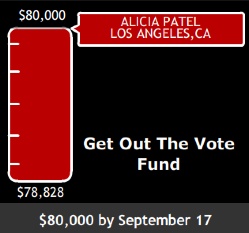
And we need to hit $150,000 by the end of the month.
And if you donate $100 now, we'll ship to you a copy of The Ralph Nader Reader, a 441-page collection of Ralph's writings on Wall Street vs. Main Street, the battle for democracy, the corporate state, and our hyper-commercialized culture. If you donate $100 now, we will send you this historic collection -- autographed by the man himself -- Ralph Nader. (This offer ends at 11:59 p.m. September 30, 2008.)
Onward to November
iraq
nprlourdes garcia-navarromorning edition
the washington postamit r. paley
the new york timesalissa j. rubin
sam dagher
maggie fox
the new york timeserica gooderiyadh mohammed
sam dagher
mcclatchy newspaperslaith hammoudithe los angeles timestina susman
katie couricthe cbs evening news
naomi klein
9/22/2008
9/20/2008
brief
Satellite images taken at night show heavily Sunni Arab neighborhoods of Baghdad began emptying before a U.S. troop surge in 2007, graphic evidence of ethnic cleansing that preceded a drop in violence, according to a report published on Friday.
The images support the view of international refugee organizations and Iraq experts that a major population shift was a key factor in the decline in sectarian violence, particularly in the Iraqi capital, the epicenter of the bloodletting in which hundreds of thousands were killed.
Minority Sunni Arabs were driven out of many neighborhoods by Shi'ite militants enraged by the bombing of the Samarra mosque in February 2006. The bombing, blamed on the Sunni militant group al Qaeda, sparked a wave of sectarian violence.
the above is from maggie fox' 'Satellite Images show ethnic cleanout in Iraq' (reuters) and thank you to c.i. for passing that on. the refugee crisis (internal and external), which was caused by violence, is what allowed a 'decrease' in violence. and that's a small decrease though the way people jaw bone about it you'd think violence had vanished from iraq.
kat has a great post tonight that's a grab post. 1 topic she's addressing is the rock & roll hall of fame and its exclusion of women. that's a topic she, elaine, c.i. and i have been talking about a great deal this year. in the early days, the hall went out of their way to ignore women. in 2003 and 2004, they couldn't find even 1 woman to induct. the next 2 years included 2 women as part of groups (blondie was inducted - including debbie harry; and pretenders were inducted including chrissie hynde). there are a ton of women who have not been inducted and, in fact, the hall was over a decade old before they finally got around to inducting janis joplin. you'd assume janis would be among the 1st inducted but that wasn't the case.
moving on to presidential politics, ralph nader was in memphis and this is from jackson baker's 'Candidate Nader Braves Bad Weather in Memphis' (memphis flyer):
Both tendencies were on exhibit Friday as Nader, assisted by one traveling aide and one local helper, came to Memphis for an appearance on behalf of his latest presidential candidacy. Speaking from a portable podium set up in front of City Hall (he had been denied access to the Hall of Mayors inside), Nader began modestly enough, introducing himself to a small battery of reporters as "an independent candidate for the presidency of the United States" and, taking note of a slowly gathering storm, asking politely, "Is that noise bothering y'all?"
Soon enough, the combination of thunder and rain heavy enough for its windblown swoops to seep underneath the City Hall overhang would jeopardize the outdoor portion of the press conference. A game Nader, who had already discussed the current Wall Street crisis, "the worst meltdown since 1929," as a scourging of taxpayers and giveaway to "crooks" and condemned the "pervasive" corporate influence within the two major parties, tried for a while to work the miscreant weather into his second major theme -- Memphis' location on the New Madrid Fault.
"Apropos this thunder, Memphis is in extreme peril of a disastrous earthquake. It's not a matter of if, it's only a matter of when," Nader said, not very reassuringly. And that inevitable cataclysm would not only destroy Memphis but severely damage St. Louis. Worse: "This area has a major natural gas trunkline going all the way to New England. The resulting fire would be like nothing any other city, including Chicago, has ever seen."
Nader had gotten into his third point - relating to the Tennessee Valley Authority and purportedly untoward contracts TVA had with Bechtel and other corporations when he yielded to the pleadings of his traveling aide and finally surrendered to the raging elements, which, in every sense of the term, had begun to drown him out.
since trina beat me to posting tonight, i have a chance to note her before monday (and i always forget on monday). be sure to check out trina's 'Vegetable Soup in the Kitchen' which not only provides that recipe, also discusses the economy and answers the question for which retail chain is the only 1 showing an increase in sales.
let's close with c.i.'s 'Iraq snapshot:'
Friday, September 19, 2008. Chaos and violence continue, a US air strike results in the deaths of Iraq civilians, the US State Dept gears up for a big push in Iraq, and more.
At the US State Dept today, deputy spokesperson Sean McCormack announced US Secretary of State Condi Rice was meeting with the Prime Minister and President of Kuwait "to talk about regional issues" and to "encourage the establishment of full diplomatic relations between Iraq and Kuwait." Asked about the status of the treaty between the US and Iraq (wrongly called a SOFA) McCormack fell back on, "I'm not going to talk about the substance of the negotiations. They continue. There have been a lot of ups and downs in these negotiations. But we still believe that we will be able to come to some agreement." US troops are currently legally covered by a United Nations mandate which expires at the end of the year. When that expires, if nothing is in place to replace it, as US Senator Joe Biden (also the Democratic vice presidential nominee) declared in a Senate session in April, then US troops would have to leave. McCormack was asked about instead of attempting a new agreement, attempting to yet again extend the UN mandate. McCormack dismissed the idea and stated, "The focus is still on getting an agreement between the United States and Iraq." McCormack stated that the State Dept's David M. Satterfield would be returning to Iraq ("leaving again Monday" for Iraq). Satterfield's title is Senior Advisor to the Secretary of State and Coordinator for Iraq.
While McCormack's trip will focus mainly on the treaty, it's part of a diplomatic push on the part of the State Dept in the final days of the current administration. Rice trip is part of that push. In recent weeks, Syria, Bahrain, Jordan, Kuwait and the United Arab Emirates have all appointed ambassadors to Iraq; however, only the UAE has stationed their Ambassador to Iraq in Baghdad. (The continued violence has prevented the other countries from doing so.)
The push comes as puppet of the occupation Nouri al-Maliki makes noises against the treaty. As Tina Susman (Los Angeles Times) reported yesterday and also on Wednesday (see Wednesday's "Iraq snapshot"), al-Maliki went on Iraqi TV Wednesday Steven Lee Myers and Sam Dagher (New York Times) discover the remarks today and report that al-Maliki declares the sticking point is over immunity for American troops in Iraq and that al-Maliki floated the idea of asking for an extension of the UN mandate declaring, "Even if we ask for an extension, then we will ask for it according to our terms and we will attach conditions and the U.S. side will refuse. U.S. forces would be without legal cover and will have no choice but to pull out from Iraq or stay and be in contravention of international law."
While al-Maliki raises that issue, one-time (and possibly current) CIA asset Ahmad Chalibi makes news. As one of the proponents (and liars) in the lead up to the illegal war, Chalabi continues to garner attention. UPI reports that he declared to the Islamic Republic News Agency that the treaties being proposed between the US and Iraq are an attempt by the US to push permanent bases. He is quoted stating, "Within the framework of the security pact, the United States does not wish to merely have open military bases (in Iraq), rather secret military bases (there). If a security deal is not signed … by Dec. 31, regarding the recent U.S.-Russia row over Georgia and the Iraqi government's decision not to extend the U.S. forces' presence in Iraq for another year, the U.S. presence in Iraq will come across with difficulty in terms of the law."
Turning to the US Congress, Senators Hillary Clinton (Democrat) and John Ensign (Republican) are proposing a plan regarding Iraq's oil to the US State Dept. Ben Lando (UPI) reports that the two senators are proposing that an oil trust fund be created for the Iraqi people and quotes an aide to Clinton explaining the proposal is similar to the Alaska model which "was 'inspiration for the idea of an oil trust' but that the State Department 'should develop a plan for Iraq so it fits Iraq's needs and provides several options'." Lando reports the State Dept's reaction: "The department said Iraqi leaders don't feel the time is right for such a trust fund, which demands too much from Iraq's fragile bureaucratic and financial systems." Lando adds that actions "continue to repair damage from storms in southern Iraq and a pipeline bomb in northern Iraq, bringing exports closer to the 1.9 million barrels per day averaged in August" and that an October 13th oil meeting will take place in London that "is expected to unveil the fields put to tender and the legal and technical specifics. The bidding for the fields is expected to be the first of many opportunities for international investment in Iraq's oil sector."
NPR's Lourdes Garcia-Navarro (All Things Considered) reports on the move for Baghdad's puppet government to take control of "Awakening" Councils next month with "at least 20 percent of the militiamen [due to be brought into] into the state security forces and find civilian jobs for the rest" and the reaction to the Sunnis about that plan which has left them suspicious following the targeting of Sunni "Awakening" leaders by al-Maliki. "Awakening" leader Khalid Ibrahim declares, "They [the US] should have consulted us before taking any decisions so we could have given our opinion. Instead they have treated us like a commodity that can be moved at will from one place to another. . . . The aim is to get rid of us. Why? Because of the upcoming provincial elections and then national elections. They fear that we will get power." The provincial elections were due to take place this month; however, the inability to comes to terms with a basic agreement makes it unlikely that any elections will take place before year's end. The United Nations is working on a proposal which they hope to present either by the end of this month or the start of October.
Mohammed Al Dulaimy (McClatchy Newspapers) reports a US air strike today which claimed mutliple lives in Al Dour. McClatchy's Leila Fadel explains that the deaths number at least eight "all from one family and including women," that the US military claims their helicopter only attacked 'terrorists' and that eye witnesses and Iraqi police disagree with the US military's statements including "Khaleel al Doori, a neighbor, [who] said his home was raided during the operation and that the American forces had used a loudspeaker to order people not to leave their homes. Doori said the U.S. troops shot a man and his wife." AP spends paragraph after paragraph parroting the US military's claims which is made all the more strange in paragraph seven: "U.S. airstrikes and conflicting claims about whether civilians have been killed have been common throughout more than five years of war as the Americans seek to minimize civilian casualties on the ground." Yes, they have repeatedly tried to minimize and fortunately for them AP joins them in minimzing today. AP quotes Sheik Faris al-Fadaam explaining the deceaded father (Hassan Ali) had been a Sunni police officer until the family had to leave Baghdad and that, "The family was very poor. The family came here and we helped them to rent that house. It was an extended family. They did not have any political affiliations. They did not engage in any hostile activity or have any connection with gunmen." Reuters does not give six opening paragraphs to the US military version of events, it gives one opening paragraph and then offers this: "A local Iraqi police officer put the death toll at eight. He said all were civilians from the same family and included three women. A helicopter air strike levelled the house at Dour, 140 km (85 miles) north of Baghdad, in Salahuddin province, he said."
Turning to some of today's other reported violence . . .
Bombings?
Mohammed Al Dulaimy (McClatchy Newspapers) reports a Baghdad roadside bombing that wounded six people and a Mosul roadside bombing that wounded two people.
Shootings?
Mohammed Al Dulaimy (McClatchy Newspapers) reports a Mosul home invasion in which both parents were killed and four other members of the family were wounded. Reuters notes 1 woman shot dead in Tuz Khurmato.
The number of US service members killed in Iraq since the start of the illegal war currently stands at 4168 with 17 for the month thus far. Since Thursday of last week, there have been 13 announced deaths.
Independent journalist David Bacon latest book (just out this month) is Illegal People -- How Globalization Creates Migration and Criminalizes Immigrants (Beacon Press). Bacon also explores migration in "Displaced People: NAFTA's Most Important Product" (NACLA Reports):Since the passage of the North American Free Trade Agreement (NAFTA) in 1993, the U.S. Congress has debated and passed several new bilateral trade agreements with Peru, Jordan and Chile, as well as the Central American Free Trade Agreement. Congressional debates over immigration policy have proceeded as though those trade agreements bore no relationship to the waves of displaced people migrating to the United States, looking for work. As Rufino Domínguez, former coordinator of the Indigenous Front of Binational Organizations (FIOB), points out, U.S. trade and immigration policy are part of a single system, and the negotiation of NAFTA was an important step in developing this system. "There are no jobs" in Mexico, he says, "and NAFTA drove the price of corn so low that it's not economically possible to plant a crop anymore. We come to the United States to work because there's no alternative."Economic crises provoked by NAFTA and other economic reforms are uprooting and displacing Mexicans in the country's most remote areas. While California farmworkers 20 and 30 years ago came from parts of Mexico with larger Spanish-speaking populations, migrants today increasingly come from indigenous communities in states like Oaxaca, Chiapas, and Guerrero. Domínguez says there are about 500,000 indigenous people from Oaxaca living in the United States, 300,000 in California alone.Meanwhile, a rising tide of anti-immigrant sentiment has demonized those migrants, leading to measures to deny them jobs, rights, or any pretense of equality with people living in the communities around them. Solutions to these dilemmas-from adopting rational and humane immigration policies to reducing the fear and hostility toward migrants-must begin with an examination of the way U.S. policies have both produced migration and criminalized migrants.
Turning to public television. This weekend (Friday in most markets), NOW on PBS will offer a look at women and politics:How have women in politics changed America and the world? NOW on PBS investigates with an hour-long special hosted by Maria Hinojosa: "Women, Power and Politics: A Rising Tide?"See the show on television this weekend or watch online STARTING SATURDAY[. . .]Show Description: Given the hoopla surrounding Sarah Palin and Hillary Clinton's historical political ascendance, why does the U.S. rank so low among countries for percentage of women holding national office? On Friday, September 19 at 8:30 pm (check local listings), in a one-hour special, NOW's Maria Hinojosa talks to women leaders around the world and here in the United States for an intimate look at the high-stakes risks, triumphs, and setbacks for women leaders of today and tomorrow. Among these women are President Michelle Bachelet of Chile, the first woman leader in Latin America who did not have a husband precede her as President, and former New Hampshire Governor Jeanne Shaheen, now in a tight race for a seat in the U.S. Senate.We also travel to Rwanda, where, 14 years after a horrific massacre left nearly one million people dead, women make up nearly half of parliament; and to Manhattan, where ambitious high school girls are competing in a high-stakes debate tournament."Women, Power and Politics," is also about the personal journey of mother and award-winning journalist Maria Hinojosa as she strives to answer the question: "What does to mean to be a woman in power?"Watch a preview and excerpt of this special program at this web address:Use this directory tool to find out where the show is airing in your area:The NOW website ... will feature web-exclusive commentary from noteworthy women including Maria Bartiromo, Sandra Cisneros, and Tina Brown; a personal essay from Maria Hinojosa; an interactive debate over Sarah Palin's candidacy; as well as opportunities for all women to post and share their stories of ambition, success, and discouragement.(The "interactive debate" over Sarah Palin's candidacy is live now ...)Bill Moyers Journal (check your local listings, begins airing on PBS in most markets tonight, it also streams online -- transcript, video, audio) guests will inclue Gretchen Morgenson (New York Times) will be on to discuss the economic meltdown and Kevin Phillips (whose most recent book is Bad Money). PBS' Washington Week finds Gwen sharing opinions with David Wessel (Wall St. Journal), Charles Babington (AP) and John Maggs (National Journal) along with one other who desperately trolled the streets in an attempt to purchase an opinion from someone, anyone, so she didn't arrive empty handed.
(Babington was not booked this morning, the plan then was to have the bad writer for the NYT who also 'reports' for MSNBC on instead).
In the US presidential race, Team Nader notes:
In the Public Interest Statement On Auto Industry Bailouts by Ralph Nader
The Big Three are in big trouble, and they have themselves to thank for it.
Ford and General Motors have reported substantial losses in the second quarter amounting to $15.5 billion, and $8.7 billion, respectively, while Chrysler, which was bought off last year by a private equity firm, Cerberus, refuses to reveal its financial standing.
It is no wonder why their lobbyists were spotted schmoozing with members of Congress at the Democratic and Republican National Conventions, liquoring up in their plush suites and private parties while they made their case for direct government loans which, if approved, would likely add to our federal deficit.
Last December, Congress approved a $25 billion loan to automakers and their suppliers under the Energy Independence and Security Act, though it has yet to be funded. That bill includes a modest requirement for automakers to increase their average vehicle fuel efficiency to 35 mpg—a benchmark we should have set decades ago, and would allow the companies to have their way with virtually no oversight or accountability.
This corporate Congress cannot be expected to issue serious demands, set tough conditions, or impose strict rules on the auto companies to ensure their workers receive fair pay and benefits, and prevent their fat-cat executives from making off big while leaving their companies in shambles.
Such blatant giveaways have become the norm in Washington since the corporate stranglehold of Congress and the White House have smothered the forces seeking worker, consumer and environmental justice.
But this recent example should not discount our long history of dealing with corporate failures in more public and effective ways than just ponying up billions on demand at any big corporation's whim.
In 1979 when Chrysler was on the verge of bankruptcy, the automaker came crying to Congress for a bailout, which they eventually got, but Congress wasn't as much of a pushover.
Back then, at least the corporate chieftains were grilled by Congress and had to agree to give something back for Uncle Sam bailing them out--good jobs and pensions for their workers, and more efficient cars to reduce reliance on foreign oil and reduce prices at the pump.
Now the CEOs don't even have to leave Detroit and they get much more money for almost no return commitment to America, while they outsource jobs and pollute our environment.
During discussion on a proposed loan bill to bailout Chrysler in October 1979, Senator William Proxmire (D-WI) who chaired the Senate Banking Committee issued his opposition to Chrysler;s request and noted: "We let 7,000 companies fail last year--we didn;t bail them out. Now we are being told that if a company is big enough… we can't let it go under." He went on to call the proposed deal "a terrible precedent."
Raising the government's demand for performance standards, President Carter's Treasury Secretary William Miller told Chrysler officials, "it's going to be so awful, you'll wish you never brought the whole thing up."
Today, we rarely hear such candid opposition to corporate orders shouted at their congressional servants who lack the fortitude to put serious restraints and conditions on mismanaged, reckless big business and their overpaid CEOs seeking tax-payer salvation.
As a part of the Chrysler deal in the late Seventies, the government took out preferred stock warrants and after the company turned itself around and repaid its loan seven years early, the government ended up cashing out, receiving $400 million in the appreciated stock.
And Congress made clear to Chrysler that it had specific conditions the company had to meet before receiving the loan guarantee. It forced the company to contribute $162,500,000 into an employee stock ownership trust fund geared to benefit at least 90 percent of its employees, design more fuel efficient autos to help reduce consumption of foreign oil, and prohibit wages and benefits from falling below a level set three months before the legislation was passed.
Today, congressional actions to grant multi-billion dollar loans to the corporations lack the reciprocity some in Congress demanded 30 years ago. Before Congress irresponsibly dips into the public piggy bank, this time it would be wise to look back at how the government once dealt with Chrysler's dilemma, require clear benchmarks to deliver on the next generation of green collar jobs, improved fuel efficiency and gain a substantial return on its investment, not just in monetary value, but in the long-term viability of the domestic motor vehicle fleet.
Congress needs to call on the auto industry to innovate their way out of this morass into which they've engineered themselves. A sensible strategy would be to issue stock warrants to the government, like in the 70s, which would create an incentive for Congress to keep pressure on the auto industry to improve. Public Congressional hearings are a must.
Will Congress echo its actions of 30 years ago when it scrutinized corporate demands, grilled company executives, and imposed conditions to ensure fair compensation and safety for workers? Or will Congress continue down the road of corporate servitude, refusing to stand up for workers, consumers, taxpayers and the environment in its session-ending stampede and flight away from auto industry accountabilities?
iraq
the new york times
sam dagher
stephen farrell
the los angeles times
tina susman
mcclatchy newspapers
mohammed al dulaimy
leila fadel
ben lando
nprdavid baconnow on pbspbswashington week
The images support the view of international refugee organizations and Iraq experts that a major population shift was a key factor in the decline in sectarian violence, particularly in the Iraqi capital, the epicenter of the bloodletting in which hundreds of thousands were killed.
Minority Sunni Arabs were driven out of many neighborhoods by Shi'ite militants enraged by the bombing of the Samarra mosque in February 2006. The bombing, blamed on the Sunni militant group al Qaeda, sparked a wave of sectarian violence.
the above is from maggie fox' 'Satellite Images show ethnic cleanout in Iraq' (reuters) and thank you to c.i. for passing that on. the refugee crisis (internal and external), which was caused by violence, is what allowed a 'decrease' in violence. and that's a small decrease though the way people jaw bone about it you'd think violence had vanished from iraq.
kat has a great post tonight that's a grab post. 1 topic she's addressing is the rock & roll hall of fame and its exclusion of women. that's a topic she, elaine, c.i. and i have been talking about a great deal this year. in the early days, the hall went out of their way to ignore women. in 2003 and 2004, they couldn't find even 1 woman to induct. the next 2 years included 2 women as part of groups (blondie was inducted - including debbie harry; and pretenders were inducted including chrissie hynde). there are a ton of women who have not been inducted and, in fact, the hall was over a decade old before they finally got around to inducting janis joplin. you'd assume janis would be among the 1st inducted but that wasn't the case.
moving on to presidential politics, ralph nader was in memphis and this is from jackson baker's 'Candidate Nader Braves Bad Weather in Memphis' (memphis flyer):
Both tendencies were on exhibit Friday as Nader, assisted by one traveling aide and one local helper, came to Memphis for an appearance on behalf of his latest presidential candidacy. Speaking from a portable podium set up in front of City Hall (he had been denied access to the Hall of Mayors inside), Nader began modestly enough, introducing himself to a small battery of reporters as "an independent candidate for the presidency of the United States" and, taking note of a slowly gathering storm, asking politely, "Is that noise bothering y'all?"
Soon enough, the combination of thunder and rain heavy enough for its windblown swoops to seep underneath the City Hall overhang would jeopardize the outdoor portion of the press conference. A game Nader, who had already discussed the current Wall Street crisis, "the worst meltdown since 1929," as a scourging of taxpayers and giveaway to "crooks" and condemned the "pervasive" corporate influence within the two major parties, tried for a while to work the miscreant weather into his second major theme -- Memphis' location on the New Madrid Fault.
"Apropos this thunder, Memphis is in extreme peril of a disastrous earthquake. It's not a matter of if, it's only a matter of when," Nader said, not very reassuringly. And that inevitable cataclysm would not only destroy Memphis but severely damage St. Louis. Worse: "This area has a major natural gas trunkline going all the way to New England. The resulting fire would be like nothing any other city, including Chicago, has ever seen."
Nader had gotten into his third point - relating to the Tennessee Valley Authority and purportedly untoward contracts TVA had with Bechtel and other corporations when he yielded to the pleadings of his traveling aide and finally surrendered to the raging elements, which, in every sense of the term, had begun to drown him out.
since trina beat me to posting tonight, i have a chance to note her before monday (and i always forget on monday). be sure to check out trina's 'Vegetable Soup in the Kitchen' which not only provides that recipe, also discusses the economy and answers the question for which retail chain is the only 1 showing an increase in sales.
let's close with c.i.'s 'Iraq snapshot:'
Friday, September 19, 2008. Chaos and violence continue, a US air strike results in the deaths of Iraq civilians, the US State Dept gears up for a big push in Iraq, and more.
At the US State Dept today, deputy spokesperson Sean McCormack announced US Secretary of State Condi Rice was meeting with the Prime Minister and President of Kuwait "to talk about regional issues" and to "encourage the establishment of full diplomatic relations between Iraq and Kuwait." Asked about the status of the treaty between the US and Iraq (wrongly called a SOFA) McCormack fell back on, "I'm not going to talk about the substance of the negotiations. They continue. There have been a lot of ups and downs in these negotiations. But we still believe that we will be able to come to some agreement." US troops are currently legally covered by a United Nations mandate which expires at the end of the year. When that expires, if nothing is in place to replace it, as US Senator Joe Biden (also the Democratic vice presidential nominee) declared in a Senate session in April, then US troops would have to leave. McCormack was asked about instead of attempting a new agreement, attempting to yet again extend the UN mandate. McCormack dismissed the idea and stated, "The focus is still on getting an agreement between the United States and Iraq." McCormack stated that the State Dept's David M. Satterfield would be returning to Iraq ("leaving again Monday" for Iraq). Satterfield's title is Senior Advisor to the Secretary of State and Coordinator for Iraq.
While McCormack's trip will focus mainly on the treaty, it's part of a diplomatic push on the part of the State Dept in the final days of the current administration. Rice trip is part of that push. In recent weeks, Syria, Bahrain, Jordan, Kuwait and the United Arab Emirates have all appointed ambassadors to Iraq; however, only the UAE has stationed their Ambassador to Iraq in Baghdad. (The continued violence has prevented the other countries from doing so.)
The push comes as puppet of the occupation Nouri al-Maliki makes noises against the treaty. As Tina Susman (Los Angeles Times) reported yesterday and also on Wednesday (see Wednesday's "Iraq snapshot"), al-Maliki went on Iraqi TV Wednesday Steven Lee Myers and Sam Dagher (New York Times) discover the remarks today and report that al-Maliki declares the sticking point is over immunity for American troops in Iraq and that al-Maliki floated the idea of asking for an extension of the UN mandate declaring, "Even if we ask for an extension, then we will ask for it according to our terms and we will attach conditions and the U.S. side will refuse. U.S. forces would be without legal cover and will have no choice but to pull out from Iraq or stay and be in contravention of international law."
While al-Maliki raises that issue, one-time (and possibly current) CIA asset Ahmad Chalibi makes news. As one of the proponents (and liars) in the lead up to the illegal war, Chalabi continues to garner attention. UPI reports that he declared to the Islamic Republic News Agency that the treaties being proposed between the US and Iraq are an attempt by the US to push permanent bases. He is quoted stating, "Within the framework of the security pact, the United States does not wish to merely have open military bases (in Iraq), rather secret military bases (there). If a security deal is not signed … by Dec. 31, regarding the recent U.S.-Russia row over Georgia and the Iraqi government's decision not to extend the U.S. forces' presence in Iraq for another year, the U.S. presence in Iraq will come across with difficulty in terms of the law."
Turning to the US Congress, Senators Hillary Clinton (Democrat) and John Ensign (Republican) are proposing a plan regarding Iraq's oil to the US State Dept. Ben Lando (UPI) reports that the two senators are proposing that an oil trust fund be created for the Iraqi people and quotes an aide to Clinton explaining the proposal is similar to the Alaska model which "was 'inspiration for the idea of an oil trust' but that the State Department 'should develop a plan for Iraq so it fits Iraq's needs and provides several options'." Lando reports the State Dept's reaction: "The department said Iraqi leaders don't feel the time is right for such a trust fund, which demands too much from Iraq's fragile bureaucratic and financial systems." Lando adds that actions "continue to repair damage from storms in southern Iraq and a pipeline bomb in northern Iraq, bringing exports closer to the 1.9 million barrels per day averaged in August" and that an October 13th oil meeting will take place in London that "is expected to unveil the fields put to tender and the legal and technical specifics. The bidding for the fields is expected to be the first of many opportunities for international investment in Iraq's oil sector."
NPR's Lourdes Garcia-Navarro (All Things Considered) reports on the move for Baghdad's puppet government to take control of "Awakening" Councils next month with "at least 20 percent of the militiamen [due to be brought into] into the state security forces and find civilian jobs for the rest" and the reaction to the Sunnis about that plan which has left them suspicious following the targeting of Sunni "Awakening" leaders by al-Maliki. "Awakening" leader Khalid Ibrahim declares, "They [the US] should have consulted us before taking any decisions so we could have given our opinion. Instead they have treated us like a commodity that can be moved at will from one place to another. . . . The aim is to get rid of us. Why? Because of the upcoming provincial elections and then national elections. They fear that we will get power." The provincial elections were due to take place this month; however, the inability to comes to terms with a basic agreement makes it unlikely that any elections will take place before year's end. The United Nations is working on a proposal which they hope to present either by the end of this month or the start of October.
Mohammed Al Dulaimy (McClatchy Newspapers) reports a US air strike today which claimed mutliple lives in Al Dour. McClatchy's Leila Fadel explains that the deaths number at least eight "all from one family and including women," that the US military claims their helicopter only attacked 'terrorists' and that eye witnesses and Iraqi police disagree with the US military's statements including "Khaleel al Doori, a neighbor, [who] said his home was raided during the operation and that the American forces had used a loudspeaker to order people not to leave their homes. Doori said the U.S. troops shot a man and his wife." AP spends paragraph after paragraph parroting the US military's claims which is made all the more strange in paragraph seven: "U.S. airstrikes and conflicting claims about whether civilians have been killed have been common throughout more than five years of war as the Americans seek to minimize civilian casualties on the ground." Yes, they have repeatedly tried to minimize and fortunately for them AP joins them in minimzing today. AP quotes Sheik Faris al-Fadaam explaining the deceaded father (Hassan Ali) had been a Sunni police officer until the family had to leave Baghdad and that, "The family was very poor. The family came here and we helped them to rent that house. It was an extended family. They did not have any political affiliations. They did not engage in any hostile activity or have any connection with gunmen." Reuters does not give six opening paragraphs to the US military version of events, it gives one opening paragraph and then offers this: "A local Iraqi police officer put the death toll at eight. He said all were civilians from the same family and included three women. A helicopter air strike levelled the house at Dour, 140 km (85 miles) north of Baghdad, in Salahuddin province, he said."
Turning to some of today's other reported violence . . .
Bombings?
Mohammed Al Dulaimy (McClatchy Newspapers) reports a Baghdad roadside bombing that wounded six people and a Mosul roadside bombing that wounded two people.
Shootings?
Mohammed Al Dulaimy (McClatchy Newspapers) reports a Mosul home invasion in which both parents were killed and four other members of the family were wounded. Reuters notes 1 woman shot dead in Tuz Khurmato.
The number of US service members killed in Iraq since the start of the illegal war currently stands at 4168 with 17 for the month thus far. Since Thursday of last week, there have been 13 announced deaths.
Independent journalist David Bacon latest book (just out this month) is Illegal People -- How Globalization Creates Migration and Criminalizes Immigrants (Beacon Press). Bacon also explores migration in "Displaced People: NAFTA's Most Important Product" (NACLA Reports):Since the passage of the North American Free Trade Agreement (NAFTA) in 1993, the U.S. Congress has debated and passed several new bilateral trade agreements with Peru, Jordan and Chile, as well as the Central American Free Trade Agreement. Congressional debates over immigration policy have proceeded as though those trade agreements bore no relationship to the waves of displaced people migrating to the United States, looking for work. As Rufino Domínguez, former coordinator of the Indigenous Front of Binational Organizations (FIOB), points out, U.S. trade and immigration policy are part of a single system, and the negotiation of NAFTA was an important step in developing this system. "There are no jobs" in Mexico, he says, "and NAFTA drove the price of corn so low that it's not economically possible to plant a crop anymore. We come to the United States to work because there's no alternative."Economic crises provoked by NAFTA and other economic reforms are uprooting and displacing Mexicans in the country's most remote areas. While California farmworkers 20 and 30 years ago came from parts of Mexico with larger Spanish-speaking populations, migrants today increasingly come from indigenous communities in states like Oaxaca, Chiapas, and Guerrero. Domínguez says there are about 500,000 indigenous people from Oaxaca living in the United States, 300,000 in California alone.Meanwhile, a rising tide of anti-immigrant sentiment has demonized those migrants, leading to measures to deny them jobs, rights, or any pretense of equality with people living in the communities around them. Solutions to these dilemmas-from adopting rational and humane immigration policies to reducing the fear and hostility toward migrants-must begin with an examination of the way U.S. policies have both produced migration and criminalized migrants.
Turning to public television. This weekend (Friday in most markets), NOW on PBS will offer a look at women and politics:How have women in politics changed America and the world? NOW on PBS investigates with an hour-long special hosted by Maria Hinojosa: "Women, Power and Politics: A Rising Tide?"See the show on television this weekend or watch online STARTING SATURDAY[. . .]Show Description: Given the hoopla surrounding Sarah Palin and Hillary Clinton's historical political ascendance, why does the U.S. rank so low among countries for percentage of women holding national office? On Friday, September 19 at 8:30 pm (check local listings), in a one-hour special, NOW's Maria Hinojosa talks to women leaders around the world and here in the United States for an intimate look at the high-stakes risks, triumphs, and setbacks for women leaders of today and tomorrow. Among these women are President Michelle Bachelet of Chile, the first woman leader in Latin America who did not have a husband precede her as President, and former New Hampshire Governor Jeanne Shaheen, now in a tight race for a seat in the U.S. Senate.We also travel to Rwanda, where, 14 years after a horrific massacre left nearly one million people dead, women make up nearly half of parliament; and to Manhattan, where ambitious high school girls are competing in a high-stakes debate tournament."Women, Power and Politics," is also about the personal journey of mother and award-winning journalist Maria Hinojosa as she strives to answer the question: "What does to mean to be a woman in power?"Watch a preview and excerpt of this special program at this web address:Use this directory tool to find out where the show is airing in your area:The NOW website ... will feature web-exclusive commentary from noteworthy women including Maria Bartiromo, Sandra Cisneros, and Tina Brown; a personal essay from Maria Hinojosa; an interactive debate over Sarah Palin's candidacy; as well as opportunities for all women to post and share their stories of ambition, success, and discouragement.(The "interactive debate" over Sarah Palin's candidacy is live now ...)Bill Moyers Journal (check your local listings, begins airing on PBS in most markets tonight, it also streams online -- transcript, video, audio) guests will inclue Gretchen Morgenson (New York Times) will be on to discuss the economic meltdown and Kevin Phillips (whose most recent book is Bad Money). PBS' Washington Week finds Gwen sharing opinions with David Wessel (Wall St. Journal), Charles Babington (AP) and John Maggs (National Journal) along with one other who desperately trolled the streets in an attempt to purchase an opinion from someone, anyone, so she didn't arrive empty handed.
(Babington was not booked this morning, the plan then was to have the bad writer for the NYT who also 'reports' for MSNBC on instead).
In the US presidential race, Team Nader notes:
In the Public Interest Statement On Auto Industry Bailouts by Ralph Nader
The Big Three are in big trouble, and they have themselves to thank for it.
Ford and General Motors have reported substantial losses in the second quarter amounting to $15.5 billion, and $8.7 billion, respectively, while Chrysler, which was bought off last year by a private equity firm, Cerberus, refuses to reveal its financial standing.
It is no wonder why their lobbyists were spotted schmoozing with members of Congress at the Democratic and Republican National Conventions, liquoring up in their plush suites and private parties while they made their case for direct government loans which, if approved, would likely add to our federal deficit.
Last December, Congress approved a $25 billion loan to automakers and their suppliers under the Energy Independence and Security Act, though it has yet to be funded. That bill includes a modest requirement for automakers to increase their average vehicle fuel efficiency to 35 mpg—a benchmark we should have set decades ago, and would allow the companies to have their way with virtually no oversight or accountability.
This corporate Congress cannot be expected to issue serious demands, set tough conditions, or impose strict rules on the auto companies to ensure their workers receive fair pay and benefits, and prevent their fat-cat executives from making off big while leaving their companies in shambles.
Such blatant giveaways have become the norm in Washington since the corporate stranglehold of Congress and the White House have smothered the forces seeking worker, consumer and environmental justice.
But this recent example should not discount our long history of dealing with corporate failures in more public and effective ways than just ponying up billions on demand at any big corporation's whim.
In 1979 when Chrysler was on the verge of bankruptcy, the automaker came crying to Congress for a bailout, which they eventually got, but Congress wasn't as much of a pushover.
Back then, at least the corporate chieftains were grilled by Congress and had to agree to give something back for Uncle Sam bailing them out--good jobs and pensions for their workers, and more efficient cars to reduce reliance on foreign oil and reduce prices at the pump.
Now the CEOs don't even have to leave Detroit and they get much more money for almost no return commitment to America, while they outsource jobs and pollute our environment.
During discussion on a proposed loan bill to bailout Chrysler in October 1979, Senator William Proxmire (D-WI) who chaired the Senate Banking Committee issued his opposition to Chrysler;s request and noted: "We let 7,000 companies fail last year--we didn;t bail them out. Now we are being told that if a company is big enough… we can't let it go under." He went on to call the proposed deal "a terrible precedent."
Raising the government's demand for performance standards, President Carter's Treasury Secretary William Miller told Chrysler officials, "it's going to be so awful, you'll wish you never brought the whole thing up."
Today, we rarely hear such candid opposition to corporate orders shouted at their congressional servants who lack the fortitude to put serious restraints and conditions on mismanaged, reckless big business and their overpaid CEOs seeking tax-payer salvation.
As a part of the Chrysler deal in the late Seventies, the government took out preferred stock warrants and after the company turned itself around and repaid its loan seven years early, the government ended up cashing out, receiving $400 million in the appreciated stock.
And Congress made clear to Chrysler that it had specific conditions the company had to meet before receiving the loan guarantee. It forced the company to contribute $162,500,000 into an employee stock ownership trust fund geared to benefit at least 90 percent of its employees, design more fuel efficient autos to help reduce consumption of foreign oil, and prohibit wages and benefits from falling below a level set three months before the legislation was passed.
Today, congressional actions to grant multi-billion dollar loans to the corporations lack the reciprocity some in Congress demanded 30 years ago. Before Congress irresponsibly dips into the public piggy bank, this time it would be wise to look back at how the government once dealt with Chrysler's dilemma, require clear benchmarks to deliver on the next generation of green collar jobs, improved fuel efficiency and gain a substantial return on its investment, not just in monetary value, but in the long-term viability of the domestic motor vehicle fleet.
Congress needs to call on the auto industry to innovate their way out of this morass into which they've engineered themselves. A sensible strategy would be to issue stock warrants to the government, like in the 70s, which would create an incentive for Congress to keep pressure on the auto industry to improve. Public Congressional hearings are a must.
Will Congress echo its actions of 30 years ago when it scrutinized corporate demands, grilled company executives, and imposed conditions to ensure fair compensation and safety for workers? Or will Congress continue down the road of corporate servitude, refusing to stand up for workers, consumers, taxpayers and the environment in its session-ending stampede and flight away from auto industry accountabilities?
iraq
the new york times
sam dagher
stephen farrell
the los angeles times
tina susman
mcclatchy newspapers
mohammed al dulaimy
leila fadel
ben lando
nprdavid baconnow on pbspbswashington week


9/18/2008
nader, crash, barack
starting out with this from team nader:
ap is running with (no evidence at all) that the helicopter crash in iraq (that took the lives of 7 u.s. soldiers) was mechanical failure. are we back to that excuse? 70 helicopters have crashed in iraq since the start of the illegal war and they've all been mechanical failure? no, ap tell us that 36 were shot down.
did you know that number? i didn't. that's because the u.s. military says 'under investigation' and the press loses interest so that when the realities are known, no 1 is paying attention anymore.
it's a cute little racket and the military are lucky to have such a willing dance partner as the press.
meanwhile the boston globe reports that barack 'is a charasmatic party frontman less popular than the banner he carries'. big surprise.
barack's a weak ass candidate. forget his attacks on hillary for a second, he has attacked the clinton years which most remember fondly. he has sucked up to ronald reagan. things like that go a long way towards explaining why a lot of democrats never warmed up to him.
mainly it is because he's so busy being himself. he's not running for 'barack obama,' he's running for president.
but the vanity on him. ay-yi-yi. it's all about him. even now when he tries to sprinkle in some weak ass 'i feel your pain' type remarks.
modesty is attractive in all but it is especially needed when you have no real accomplishments.
not only does he not try to act like he wants to work for us, he's got nothing to point to that shows he could.
i've been thinking about his high-flying-adore tour this summer and i think that's when he went from celebrity to fabio.
that really hurt him.
as usual the cult of saint barack (in panhandle media) dismissed it and ruled it a 'victory.' but talk to people and you'll see it still is an issue.
fabio pretty much describes him at this point. he's famous for being famous.
you can't claim he's famous for doing anything.
so democrats and barack really aren't all that tight.
they can't be.
he's got the communists and the socialists doing cart wheels. big surprise, they wrecked their own parties and now they want to wreck the democratic party.
but it was obvious in the primaries that he wasn't nailing down the base which does include african-americans. he really had to win south carolina or it was all over for him. so he and his surrogates played the race card over and over.
and now they're back to that.
donna brazile, amy goodman and governor kathy see-me-boobs-while-i-don't-wear-a-bra-and-stand-before-a-fireplace democratic 'response' to the state of the union address.
all 3 have deployed the race card yet again.
amy goodman had another crackpot idiot (and non-democrat) on her trashy show today to insist that calling people 'racist' hurts barack's chances. he thinks they are racists, he just thinks they get their (racist?) feelings hurt if they're called that. it's a real easy out for barack. every time some 1 doesn't like him, they must be a racist.
it's the only card they have left to play and even then you're dealing with a lie because barack is bi-racial and not black.
but the whole barack creation myth has always been a fantasy.
barack was always the weakest candidate. propped up by the press and handed the nomination that hillary won. remember how he was going to remake the map? yeah, that 1 bit the dust. remember how donna brazile said on cnn that the base wasn't needed? how's that working out for saint barack?
remember this is supposed to be a democratic year and any 1 could win the white house? isn't looking that easy now that we've got an unqualified and untested candidate.
let's close with c.i.'s 'Iraq snapshot:'
Ridiculing Ralph
In a letter to Congress on July 23, 2008, Ralph Nader warned that the federal government's bank insurance fund may be insufficient to handle the developing crisis in the banking industry.
The day after Ralph sent out his warning, he was ridiculed in Congress.
One member, Spencer Bachus, at a Congressional hearing, mentioned Ralph's letter and said point blank "Our banks are well capitalized, our deposit insurance fund is sound. There's absolutely no factual basis for saying that there's not money there to pay."
Fast forward to September 17, 2008, today, less than two months after Ralph sent his letter.
And now we have an Associated Press story, featured prominently right now on the Drudge Report, with the headline "Federal bank insurance fund dwindling."
Here's the opening sentence from the AP report today:
"Banks are not the only ones struggling in the growing financial crisis. The fund established to insure their deposits is also feeling the pinch, and the taxpayer may be the lender of last resort."
The reality is that the Democrats and Republicans have screwed up royally.
They have screwed up because they are under the thumb of the big corporations.
The big corporations said -- weak regulation, weak law and order for corporations.
And the Democrats and Republicans delivered for their corporate paymasters.
The rest of us -- taxpayers and workers alike -- will now suffer the consequences -- through either increased taxes, lost jobs -- or both.
For his entire career, Ralph Nader has been sounding the alarm about the dangers of deregulation, about the dangers of a hands off approach to corporate power.
Time to listen up.
Reassert the public will.
And get behind the one Presidential candidacy that has the track record and will power to set things straight.
How?
If you haven't donated yet to Nader/Gonzalez -- do it now.
We're really close to meeting our goal of $80,000 by midnight tonight.
Donate now, whatever you can afford -- $10, $20, $50, $100.
And help push us over the top.
If you give $100 or more now, we will send you In Pursuit of Justice, the 520-page book of essays by Ralph Nader -- essays on corporate power, the Constitution, and transforming our country. If you donate $100 now, we will send you this historic collection -- autographed by the man himself -- Ralph Nader. (This offer ends at 11:59 p.m. tonight.)
Together, we will make a difference.
Onward to November.
The Nader Team
ap is running with (no evidence at all) that the helicopter crash in iraq (that took the lives of 7 u.s. soldiers) was mechanical failure. are we back to that excuse? 70 helicopters have crashed in iraq since the start of the illegal war and they've all been mechanical failure? no, ap tell us that 36 were shot down.
did you know that number? i didn't. that's because the u.s. military says 'under investigation' and the press loses interest so that when the realities are known, no 1 is paying attention anymore.
it's a cute little racket and the military are lucky to have such a willing dance partner as the press.
meanwhile the boston globe reports that barack 'is a charasmatic party frontman less popular than the banner he carries'. big surprise.
barack's a weak ass candidate. forget his attacks on hillary for a second, he has attacked the clinton years which most remember fondly. he has sucked up to ronald reagan. things like that go a long way towards explaining why a lot of democrats never warmed up to him.
mainly it is because he's so busy being himself. he's not running for 'barack obama,' he's running for president.
but the vanity on him. ay-yi-yi. it's all about him. even now when he tries to sprinkle in some weak ass 'i feel your pain' type remarks.
modesty is attractive in all but it is especially needed when you have no real accomplishments.
not only does he not try to act like he wants to work for us, he's got nothing to point to that shows he could.
i've been thinking about his high-flying-adore tour this summer and i think that's when he went from celebrity to fabio.
that really hurt him.
as usual the cult of saint barack (in panhandle media) dismissed it and ruled it a 'victory.' but talk to people and you'll see it still is an issue.
fabio pretty much describes him at this point. he's famous for being famous.
you can't claim he's famous for doing anything.
so democrats and barack really aren't all that tight.
they can't be.
he's got the communists and the socialists doing cart wheels. big surprise, they wrecked their own parties and now they want to wreck the democratic party.
but it was obvious in the primaries that he wasn't nailing down the base which does include african-americans. he really had to win south carolina or it was all over for him. so he and his surrogates played the race card over and over.
and now they're back to that.
donna brazile, amy goodman and governor kathy see-me-boobs-while-i-don't-wear-a-bra-and-stand-before-a-fireplace democratic 'response' to the state of the union address.
all 3 have deployed the race card yet again.
amy goodman had another crackpot idiot (and non-democrat) on her trashy show today to insist that calling people 'racist' hurts barack's chances. he thinks they are racists, he just thinks they get their (racist?) feelings hurt if they're called that. it's a real easy out for barack. every time some 1 doesn't like him, they must be a racist.
it's the only card they have left to play and even then you're dealing with a lie because barack is bi-racial and not black.
but the whole barack creation myth has always been a fantasy.
barack was always the weakest candidate. propped up by the press and handed the nomination that hillary won. remember how he was going to remake the map? yeah, that 1 bit the dust. remember how donna brazile said on cnn that the base wasn't needed? how's that working out for saint barack?
remember this is supposed to be a democratic year and any 1 could win the white house? isn't looking that easy now that we've got an unqualified and untested candidate.
let's close with c.i.'s 'Iraq snapshot:'
Thursday, September 18, 2008. Chaos and violence continue, a US helicopter crashes, 1 US soldier enters a guilty plea, independent presidential candidate Ralph Nader makes news even when the news outlets don't report it, this weekend's NOW on PBS examines women and politics, and more. Starting with Tuesday's US House Committee on the Budget's hearing on Iraq's Budget Surplus. We're focused on the first panel where the witness was the Government Accountability Office's Joseph A. Christoff. Tuesday's snapshot covered some of the statements by the committee chair John Spratt Jr., US House Rep Chet Edwards and US House Rep Lloyd Doggett. Tuesday night, Mike noted some of US House Rep James McGovern's questioning as did Wednesday's snapshot which also noted Bob Etheridge, Dennis Moore and Tim Bishop. Marion Berry: I also think anytime we have a hearing like this, we should first and foremost recognize the contribution and sacrifice that our men and women in uniform and their families have made and we should never ever fail to be appreciative of that. Joseph Christoff: Absolutely. Marion Berry: And show that appreciation in every possible way. As I've listened to this testimony and we can talk about numbers, we can talk about policy and all of those things -- it seems to me that we're in a situation where it reminds me of a bumper sticker you see from time-to-time: "DON'T FOLLOW ME, I'M LOST." You just said a while ago, that there's not a plan. I don't know who doesn't have a plan. It seems to me to be pretty obvious that nobody does. I cannot imagine a more ridiculous situation than we're in right now. I would like to think from some of the things you've said that we may actually have a reasonable expectation that it'll get a little better but at the same time we don't have any reason to think it's going to be cleared up and every thing's going to be in really good shape over there in the next few years. Don't know how you define "few." I'd say anything under five years. But I just -- I don't see any, I'm like Mr. McGovern, I don't see any way to end this. We just keep pouring money into that place. We continue to make deals that no responsible person would enter into, it seems to me. And we thank you for bringing us this information too, at least letting us know what is really going on as best as you're able to determine it and I'm confident that you've done that. And we appreciate all of that. Beyond that, I think it's time for the Congress, the American people, the administration and anyone else in a position of responsibility to being to start figuring out how we're going to get out of there and how we're going to bring this to a conclusion because the American people can't stand much more of it. And I thank you for the work that you've done. We have two more Democrats to note. Other than Pete Ryan (Ranking Minority Member), Republicans elected to skip to the first panel. Allyson Schwarts: I also thank you for this information. And it's important for us to be having this hearing today and I thank the chairman for doing it because we -- and in some ways, you're offering suggestion on how we can see our way out of this if we just really look at things really quite differently which is that -- as has been pointed out, you pointed out and many of the speakers before me have pointed out -- we have, we're looking at working with the Iraqis to make sure that they use their almost $80 billion surplus to start spending their money on reconstruction. And I was particularly struck that recently there was a -- I guess it was back in August -- some discussions about rebuilding police stations in Iraq and spending American dollars to do that. I have to say representing the city of Philadelphia and the suburbs, I go to police stations and fire stations all across my district and they need reconstruction. And so instead of a president saying we're going to spend our dollars on reconstructing our police stations and helping our first responders we're spending American dollars on reconstruction in Iraq when the Iraqis are actually sitting on $79 billion. Now you talked about the politics of why it hasn't happened but my question really is how can we -- is there a way for us to, one, start to say -- we've tried to in Congress -- to say Iraqis should start paying for reconstruction. I believe the last bill we passed actually had the condition of their spending 50% Joseph Christoff: Right. Allyson Schwartz: -- on going forward on that. Is there anyway that you would actually -- that we could insist upon that happening? Is there a way that we could get back some of these dollars that we're spending now that are committed into the future? We were led to believe several years ago that we would not have to pay for this war at all. And that's been pointed out as well. And yet we are right now spending billions of American tax payer dollars to reconstruct Iraq when Iraq has the money. And adding insult to injury we're spending a whole lot, every American family, on the price of gasoline that we're buying from the Iraqis. I mean something about this picture just isn't right no matter how you feel about this war or our going into it. I've been asked just recently this weekend was asked about how we could -- why we're not doing enough to make sure that we get the Iraqis to spend their money on reconstruction. And I understand the politics of it. And I understand even the difficulties on some of the buerocrats. But even if we lend expertise even if we help them figure out how to do this -- why -- is there more that we could be doing to make sure that going forward the Iraqis are spending their money, particularly the surplus -- $80 billion dollars surplus, rather than the American tax payer on reconstruction of basic infrastructure for the Iraqi people which we all agree needs to get done. But why not the Iraqis? And why is this administration -- that's political. What could we be doing even from your perspective to make sure that going forward this is really a changed world, we're not spending American tax dollars on reconstruction, the Iraqis are? Joseph Christoff: Well let's just talk about this concept of trying to get repayment for perhaps what we did. I think we began in 2004 with good intentions. With good intentions to the fact that the Iraqis at that time did not have the resources. So when you appropriated the $18.4 billion dollars in IRRF 2 (Iraq Relief and Reconstruction Fund) it was "to jump start the reconstruction process" under two premises that generaly did not pan out. One that it would be a benign environment where you could do reconstruction without violence and secondly the Iraqis would step up to the plate and third the international community would contribute. Those premises never really panned out until quite frankly recently where we see the Iraqis now have a substantial amount of money. I shouldn't say recently. They had surpluses in '05, '06 and '07 as well because they didn't spend on the investments. Allyson Y. Schwartz: But you're making a good point, if things are more secure if the issues around violence allows them to do some of this reconstrutcion without spending so many dollars on security can we actually get them to both repay us and get them to pay going forward? Joseph Christoff: Yeah, I don't know if we want to take back our generous contributions to try to jump start -- because I thought they were good intentions back in 2004. But again going forward I do think you should have the healthy debate about cost sharing. And you began it with the roughly three billion dollars that you put and the restrictions you put on the economic support fund -- that it should be a dollar for dollar cost sharing. The State Department in two weeks has to send a report to the Congress certifying that the Iraqis are engaged in cost sharing on the ESF so it will be interesting to see exaclty how the State Department can confirm that that is actually occurring Allyson Y. Schwartz: I should say not just interesting but also important to our financial security here at home and to respond to the Amercian people that we've actually said that there had to be cost sharing dollar for dollar and it will be important for us to see that that is actually happening going forward. And of course we'd like to see at some point the Iraqis pick up much more of the reconstruction if not all of it. The last Congress member to question Christoff was Marcy Kaptur. Pay close attention to his final answer to her. She's asking for very basic information, stats and figures (including arrests) and that information, according to Christoff, isn't public. It recalls his earlier comment to House Rep Tim Bishop who merely asked about the possible impact of the de-Baathifcation legislation (passed but not implemented) which resulted in Christoff informing Bishop that it was classified information he could not reveal in an open hearing. What are the possible effects of that legislation -- labeled a benchmark by the White House -- can't be made public. Now Bishop and Kaptur both have clearance. They can get the information as members of Congress. But what Christoff's testimony repeatedly underscored was how much information is being kept from the American people. Marcy Kaptur: I've been looking over one of the charts that we've been provided that shows the increase in spending by the people of the United States on the war in Iraq and I think everyone knows that every year it gets larger. I remember Secretary [Paul] Wolfowitz coming up before our defense committee saying that we didn't have to worry about this because it would all be paid for. Well, where is he now? I have no idea where he is but he certainly wasn't correct in those statements which I think influenced a lot of the members of this Congress to vote in the way that they did. But one of the bits of information that I have here, that I want you to clarify for me deals with the, what appears to me to be two structures operating in Iraq -- one by the United States and one by the government of Iraq. It says: "While the United States has spent 70% of the $33 billion that it has allocated for key security, oild, water and electricity sectors." In other words, we're spending down the money that the American people have allocated for this. Iraq has only spent 14% of the $28 billion it allocated to those sectors or less than 3% of the 10 billion that it had programmed from the year 2005 to 2008. So as I read these numbers and I'm looking at the expenditure of our dollars and we look at how much we have spent versus how much they have spent, it seems to me then that there may be two structures operating in Iraq: The American paid for structure and then the Iraqi structure. Because how could the Iraqis be doing such a poor job? Is my perception correct that in fact there are two structures operating there? Joseph Christoff: Well in terms of the -- Marcy Kaptur: For electricity, for water, for oil and security> Joseph Christoff: Well in terms of how things are spent, obviously when the US spends its money, the majority of that is being spent through the Corp of Engineers -- they've been the big builder using US appropriated dollars. So they're using Corp of Engineering contracting, procurement, budgeting procedures. When you look at how the Iraqi government is spending its resources, it's going through its own ministries -- oil and electricity, water -- to try to do the types of contracting and procurement. So yes there are seperate procedures because there are seperate pots of money. Marcy Kaptur: I appreciate that because if in fact oil production has gone up it's been because of US expenditures because obviously the Iraqi expenditures aren't locking in. Joseph Christoff: Right. Most of the money on oil infrastructure has been the US funding. Marcy Kaptur: Then why would Iraq sign its first contract with China? You have any -- Joseph Christoff: I don't know. Marcy Kaptur: -- clarity on that? Joseph Christoff: No. Marcy Kaptur: And Royal Dutch Petroleum, Royal Dutch/Shell is the next one they signed a deal with? I just find all of this very, very strange. Could you also tell me in terms of the sabatoge and the smuggling -- Joseph Christoff: Mmh-hmm Marcy Kaptur: -- it's estimated by some that at least a third of what is occurring in the oil sector -- and again, it's unclear to me who is really managing the oil sector? Is it the US dollars that have been allocated or is it the Iraqi dollars that really have a handle on what is happening in the oil sector? But regardless, if you have any comments on that I would appreciate it, of the dollars being expended, why is so much being smuggled out of there? Who doesn't have control of what's happening in the oil fields? Joseph Christoff: Well I think actually the smuggling and the diversions have declined over the past couple years. The biggest problem that occurred back in 2006 was massive smuggling -- estimates of up to two million dollars out of the Baiji refinery because there was not sufficient protection forces around it. The US and the Iraqi government have responded by putting more protection forces around the majory refinery in Iraq at Baiji and also trying to set up these oil facility police forces that are trying to manage and protect the oil pipelines and the infrastructures particularly in the north. But there are still interdictions that are occuring because you can't cover everything and -- Marcy Kaptur: May I ask you, sir, who hires those security officers for those oil installations? Joseph Christoff: Yeah, right now it's the Ministry of OIl but it's supposed to eventually be subsumed in the Ministry of Interior's police forces Marcy Kaptur: But if we look at the expenditure of Iraqi dollars to do all of this, it looks like the US contracted operations are spending their dollars down without them, Iraq wouldn't be able to function. Am I correct? If you just pulled the US contracts and llet them fly on their own. Joseph Christoff: Well we have lots of reconstruction projects in all of the critical sectors including the oil sector so we have been investing over the past several years in trying to build pipelines, trying to improve the refinery capacity -- a lot of individual projects have added up to billions of dollars. The Iraqis are trying to spend more money in terms of the oil sector. One of the problems with the Ministry of Oil is that, unlike the Ministry of Electricity, it has not developed any type of a plan to determine what its needs are, its priorities and exactly where it should be spending its future resources. And the Ministry of Electricity has a pretty good plan. The Ministry of Oil does not yet have a plan to try to set its own priorities. And he himself has estimated that he needs $30 billion to try to improve the oil infrastructure in Iraq. Marcy Kaptur: I know my time has expired. If I wanted to read one clear report on what is really going on inside the Iraqi oil sector what would I read? Joseph Christoff: Inside the Iraqi oil sector? Marcy Kaptur: For security officers. Who's paying for it, how much is being smuggled, who did the smuggling, was anybody aprehended? Where do I find that? Joseph Christoff: Well I'd probably have to go back to some of the CIA reports that I read that you wouldn't be able to read in public domain. Marcy Kaptur: Thank you. Thank you, Mr. Chairman. Again, Kaptur is asking for very basic information. She's not asking for information on how to build a weapon. Stats is all she's asking for and she's informed that the information isn't for the public. The operations Christoff is reporting on are paid for by the tax payer and the tax payer is repeatedly told that things are 'improving' in Iraq. So why is very basic information being kept from the tax payers. And if, dropping back to Bishop's question, the US anticipates that there will be some awful bloodbath as a result of the de-Baathification legislation, since the White House has labeled it a benchmark and since it has yet to be put into effect, shouldn't both the American people and the Iraqi people have a right to know the projections that have been made on that? Turning to Iraq, last night CNN reported that a helicopter has crashed in Iraq claiming the lives of 5 US service members. Sameer N. Yacoub (AP) said the death toll is "seven U.S. soldiers" and cites M-NF as the source. M-NF updated it today announcing: "Seven U.S. Soldiers were killed when a CH-47 Chinook crashed about 100 km west of Basra at approximately 12:01 a.m. Thursday. The Chinook was part of a four-aircraft aerial convoy flying from Kuwait to Balad. The seven Soldiers were the only ones onboard the Chinook at the time of the crash. A British Quick Reaction Force team was dispatched from Basra to assist at the site. A road convoy in the vicinity was also diverted to the scene. The names of the deceased are being withheld pending notification of next of kin and official release by the Department of Defense The incident is under investigation, however enemy activity is not suspected." The Washington Post notes, "There was no word on the cause of the crash or whether hostile fire was involved." Camilla Hall and Michael Heath (Bloomberg News) report that the military is now publicly stating that this should be considered "an accident" on their 'initial' information but that the US military added, "At this time we are uncertain of the cause, but hostile fire has been ruled out." Sudarsan Raghavan (Washington Post) observes, "In total, that means 11 U.S. service members have died since Sunday for non-combat-related reasons" while noting the helicopter crash itself "was the deadliest U.S. helicopter accident in Iraq since Aug. 22 of last year, when a Black Hawk helicopter crashed in the northern part of the country, killing 14 U.S. soldiers." Joseph Giordono (Stars & Stripes) notes, "The AP reported that an aide to U.S. Rep. Mary Fallin, R-Okla., said four Texans and three from Oklahoma were among the seven National Guardsmen killed in [the helicopter crash[ . . . Fallin's spokesman Alex Weintz says the four Texans killed were soldiers from the Texas National Guard." ICCC lists 4168 as the number of US service members killed since the start of the illegal war with 17 for the month thus far. On shootings, yesterday's snapshot noted: "Meanwhile, AP reports that Staff Sgt. Darris J. Dawson and Sgt. Wesley R. Durbin's deaths on Sunday in Iraq are under investigation and a US soldier 'has been taken into custody' due to the deaths. Troy Moon (Pensacola News Journal) reports that Dawson was 'a father of four' and a graduate of Escambia High and quotes his stepmother Maxine Mathis stating, 'It's bad enough he had to fear the enemy. But he had to fear a fellow soldier. This is senseless. Not only did (the alleged shooter) take our son's life, he took another man's life as well. It's just horrible. I want people to know what happened.'' Chris Vaughn (Fort Worth Star-Telegram) reports that Durbin was from Dallas and 'an honor student and 2001 gradute of Dallas Luterhan School. He volunteered in the Civil Air Patrol in high school, then joined the Marines. After he left the Marine Corps, he joined the Army two years ago'." Greg Mitchell (Editor & Publisher) notes the silence on this story and then amends an AP story at the end which, please note, raids Troy Moon's report and does so without credit. Today Nicholas Spangler (McClatchy Newspapers) reports that Dawson was on his third tour of duty and that his stepmother (Maxine Mathis) states, "He was telling me about these nightmares he'd have. He'd wake up in a cold sweat, seeing the things he was seeing over there. It really was messing with my son's mind." NYT's Stephen Farrell (for the Times' owned International Herald Tribune) explains that April of 2005 saw "Seargent Hasan Akbar, of the 101st Airborne Division, was sentenced to death over a grenade attack on his comrades in March 2003 in Kuwait, at the very outset of the war" and "In November 2006, Staff Seargent Alberto Martinez, serving with the New York National Guard, was arraigned in a military court suspected of murdering two officers in a grenade and mine explosion at one of Saddam Hussein's former palaces in Tikrit in June 2005. He has consistently maintained his innocence but if convicted could face the death penalty." Yesterday's snapshot also included this: "BBC reports that Sgt John Hatley, Sgt 1st Class Joseph Mayo and Sgt Michael Lehy Jr. are charged with murdering four Iraqis ('blindfolded, shot and dumped in a canal in April 2007'). . . . CBC notes, 'The killings are alleged to have been retribution for casualties suffered by U.S. forces.' CBC also states that four more are being held and are under investigation (with two of the four US soldiers having been charged). AP, however, says the four additional soldiers 'have already been charged with conspiracy in the case'." None of those three soldiers charged with murder has entered a plea but one of the four charged with conspiracy has: Spc Belmor Ramos. AP reports that Ramos "pleaded guilty to conspiracy to murder and was sentenced to seven months in prison Thursday in the deaths of four Iraqis, saying he stood guard from a machine-gun turret while the bound and blindfolded prisoners were shot." In some of today's reported violence . . . Bombings? Sahar Issa (McClatchy Newspapers) reports 3 Baghdad roadside bombings that left twelve people wounded (including five Iraqi soldiers), a Nineveh roadside bombing that claimed the lives of 2 Iraqi soldiers (one more wounded) and, dropping back to last night, a Nineveh car bombing that wounded one police officer. Reuters notes a Mosul roadside bombing that claimed the lives of 3 Iraqi soldiers, 2 Tal Afar roadside bombings that left nine people injured and a Hawija roadside bombing that left two people injured. Shootings? Sahar Issa (McClatchy Newspapers) reports a man shot dead in Mosul and his wife and daughter injured in the shooting and 1 person shot dead in Nineveh province. Reuters notes a Mosul home invasion that claimed 4 lives and 2 drive-by shootings in Mosul that each claimed the life of a "retired security personnel". Corpses? Sahar Issa (McClatchy Newspapers) reports 2 corpses discovered in Baghdad. Reuters notes 3 corpse discovered in Mosul. Ralph Nader is the independent presidential candidate. Matt Gonzalez is his running mate. Yesterday the campaign was able to announce that Nader - Gonzales was on the ballot in Florida (officially). Today they announce Nader made 46 ballots. That is the 45 states ballots they set as their goal (and achieved before their self-declared deadline) as well as the ballot in the District of Columbia. Team Nader notes that residents of Texas, Georgia, Indiana and North Carolina will be able to vote for Nader - Gonzalez via write-in which means the residents of 49 states (and DC) can vote for them. The 45 state ballots is eleven more than in 2004 and one more than in 2000. The Nader campaign's Michael Richardson explains, "This means 85 percent of the American electorate will actually see the names Ralph Nader and Matt Gonzalez on their ballots. . . . This is quite a feat since states generally make it really hard for third-party candidates to get on state ballots. But in every state, our volunteers collected more than enough signatures to qualify. The response has been positive -- much better than in 2004. It's obvious that there is national interest in more choices and independent candidates outside the two-party system." Tomorrow the Nader - Gonzalez campaign holds a rally in Lousiville, Kentucky (6:30 p.m., University of Louisville, Swain Student Activities Center, Suite W310). I have always been skeptical when people blame a lack of news coverage on some nefarious plot by the media. Most people who cry media 'blackout' aren't that newsworthy, have stories that don't check out, or don't pitch their story that well. The truth is, unless you have a compelling, timely, well pitched story, today's media will not cover it. They are too burdened by ever tighter web-driven deadlines, fewer reporting staff, and the barrage of sophisticated public relations professionals who definitely do know how to pitch a story, and outnumber reporters 5-to-1. But after a full week working as Ralph Nader's media coordinator, I have a new perspective. The story of the decade is breaking, we have the candidate of the century on this story--and we are getting no coverage by major media. After years of neglect, deregulation, and sharp declines in corporate transparency and corporate accountability, the gig is up and Wall Street is being shaken to its foundations. What has already happened towers over the savings and loan crisis, and we are not even close to the end, or even the beginning of the end. The Wall Street bailouts and wipe outs are on track to be the biggest frontal assault on financial consumers and taxpayers in history. Ralph Nader, America's undisputed protector of consumers, has uncannily tracked the chain of events--on the documented public record--that has led our economy down this devastating path. In countless letters, testimonies and reports--all warning of the dangers of unrestrained greed absent accountability and transparency (check for yourself at Nader.org), Ralph proposed alternative paths, and all along the way he was ignored or ridiculed. Now he has a plan to soften the blow, get us out of the morass, and help ensure it doesn't happen again. But no major press will cover it. No New York Times. No Wall Street Journal. No Associated Press. No network news. Nothing but a pundit on C-Span, kudos from a newsletter and a little article on the web site Politico. The September 16th Washington Post summed up the gravity of this issue on its front page: "Yesterday's meltdown on Wall Street brought the economy roaring back to the center of the presidential campaign, and the question for the final seven weeks of the general-election campaign is whether Barack Obama or John McCain can convince voters that he is capable of leading the country out of the morass." If the meltdown on Wall Street and bailout by taxpayers is the deciding factor of this election:
His name is not Barack Obama or Senator McCain, and he is invisible as far as the media is concerned. Yesterday, Ralph Nader issued a chronology of the lead-up to the current meltdown, and his ten-point plan to restore a semblance of accountability, transparency, and incentives that would steer Wall Street away from short-termist, out-of-control casino capitalism toward fulfilling its proper function of efficiently allocating capital to advance our long-term economic well-being. The plan was sent out to 6,000 reporters, including specific e-mails and phone calls to the editors and reporters from the major newspapers that are on this beat and evening TV news producers. Aside from the Fox cable business channel, no major media picked it up. After a series of editorial board meetings we did this week with the Washington Post and New York Times Washington Bureau, I think I know why. When we asked them what their standards for covering Ralph Nader were, it was clear they didn't have any. But Fred Hiatt, the editorial page editor at the Washington Post, hit the nail on the head. He said, "I like some of your issues, but I don't see how you being a presidential candidate affects them. I see you more as a consumer advocate." In other words, if Ralph was just some guy running for president on the ballot in 45 states with 5 percent support in the polls, he might actually get some coverage in that role, rather than having his giant stature as a consumer advocate trivialize his presidential candidate stature. So today, when AP broke a story that the Federal bank insurance fund was dwindling and in danger of needing a taxpayer bailout, I tried taking Fred up on his advice and pitched to the economic editors and financial reporters, emphasizing 'Ralph the consumer advocate.' It happened that just two months ago Ralph wrote a letter to Chris Dodd and Barney Frank, who have oversight over the FDIC, warning of exactly this and suggesting some measures to shore up the FDIC reserves before it was too late. As usual Congress dismissed Ralph's warning, with Congressman Spencer Bachus saying there was "no factual basis" for his concern. Six years ago, Ralph warned of the potential shakeout from Clinton giving most of the commercial banks free federal deposit insurance since 1995, saying, "Don't be surprised if this latest banking reform deteriorates into little more than another version of the savings and loan deposit insurance reforms of 1980 which helped fuel that industry's demise and lightened taxpayers' pockets by several hundred billions of dollars." Here we have a substantive story where Ralph is right in the sweet spot from the beginning of the problem to the present. I phoned up Marcy Jones, the AP SEC reporter who had broken the story to let her know Ralph had called it six years back, and that he now had a plan to fix it. But Marcy didn't want to hear from Ralph either, and referred to me to the political desk. I called the AP Washington Politics Editor, Donna Cassata, with great enthusiasm, saying "Now I have something that is too good to pass on." But she passed. The Wall Street meltdown story has Ralph Nader's name all over it, and as a candidate or as a consumer advocate he should be getting an avalanche of requests and invitations--not a stone-wall. That's ok. This story is not going away and neither are we. If need be, our supporters will overwhelm the political and economic editors and producers, taking the public relations professional-to-journalist ratio to a new order of magnitude. In the mean time, thank goodness for our Cardozo the Parrot video, which goes to show that even sheep cannot ignore a talking bird. Team Nader then links to this Washington Post piece by Chris Cillizza. Staying with politics, this weekend's NOW on PBS offers: How have women in politics changed America and the world? NOW on PBS investigates with an hour-long special hosted by Maria Hinojosa: "Women, Power and Politics: A Rising Tide?" See the show on television this weekend or watch online STARTING SATURDAY [. . .] Show Description: Given the hoopla surrounding Sarah Palin and Hillary Clinton's historical political ascendance, why does the U.S. rank so low among countries for percentage of women holding national office? On Friday, September 19 at 8:30 pm (check local listings), in a one-hour special, NOW's Maria Hinojosa talks to women leaders around the world and here in the United States for an intimate look at the high-stakes risks, triumphs, and setbacks for women leaders of today and tomorrow. Among these women are President Michelle Bachelet of Chile, the first woman leader in Latin America who did not have a husband precede her as President, and former New Hampshire Governor Jeanne Shaheen, now in a tight race for a seat in the U.S. Senate. We also travel to Rwanda, where, 14 years after a horrific massacre left nearly one million people dead, women make up nearly half of parliament; and to Manhattan, where ambitious high school girls are competing in a high-stakes debate tournament. "Women, Power and Politics," is also about the personal journey of mother and award-winning journalist Maria Hinojosa as she strives to answer the question: "What does to mean to be a woman in power?" Watch a preview and excerpt of this special program at this web address: Use this directory tool to find out where the show is airing in your area: The NOW website ... will feature web-exclusive commentary from noteworthy women including Maria Bartiromo, Sandra Cisneros, and Tina Brown; a personal essay from Maria Hinojosa; an interactive debate over Sarah Palin's candidacy; as well as opportunities for all women to post and share their stories of ambition, success, and discouragement. (The "interactive debate" over Sarah Palin's candidacy is live now ...) |
 troy moon
 greg mitchell
 the washington post
 sudarsan raghavan
 stephen farrell
 now on pbs
 pbs
pbs
Subscribe to:
Posts (Atom)